Introduction
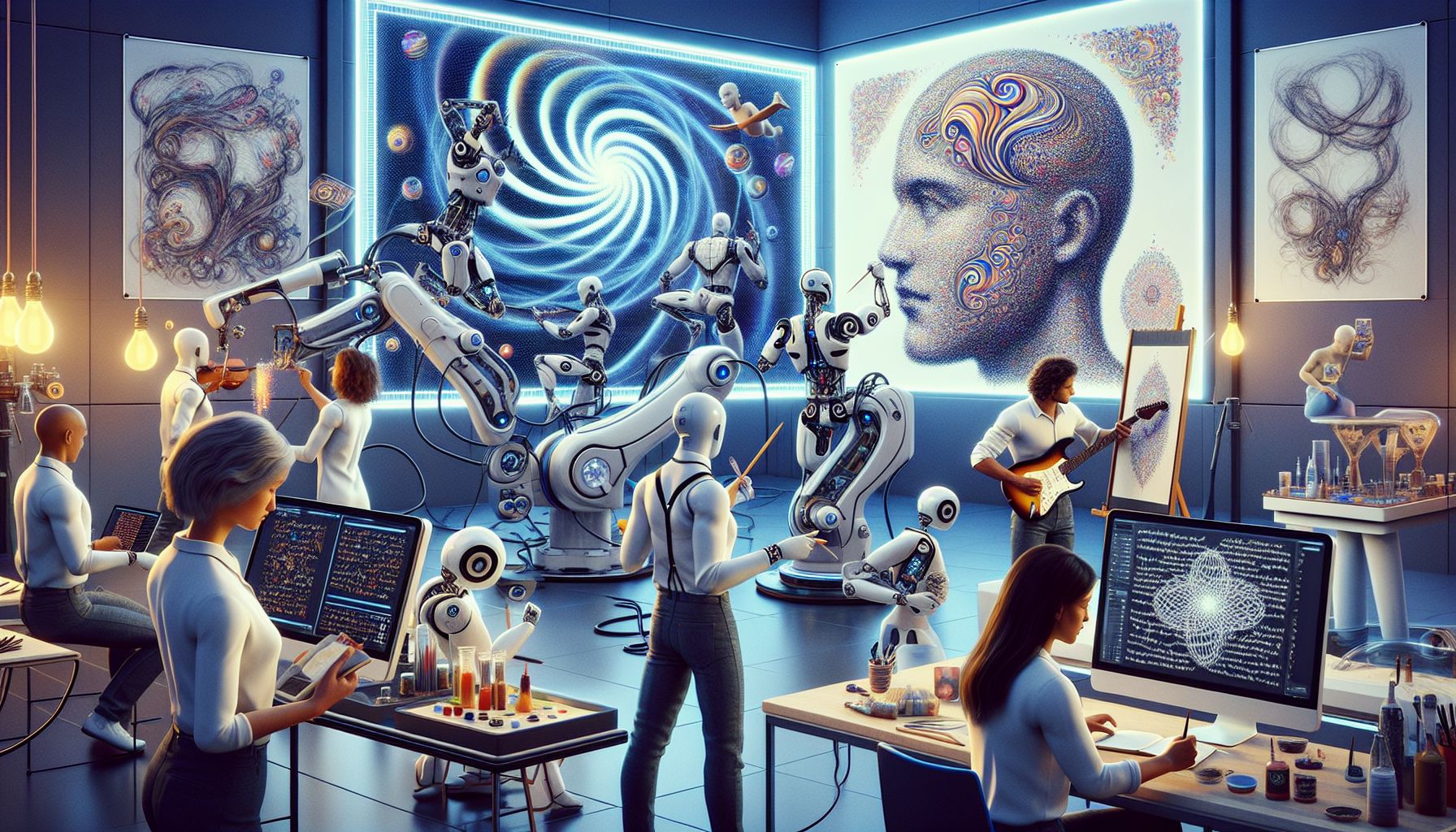
Hello, fellow tech enthusiasts and digital explorers! Today, we’re exploring how Artificial Intelligence is transforming creativity, and honestly, it’s kind of mind-blowing. AI has worked its way into every creative corner you can think of, from writing and visual arts to music and design, creating possibilities that seemed like science fiction just a few years ago. What really gets me excited is how this AI-driven creativity is completely changing how we think about art and storytelling, turning traditional ideas about artistic creation on their head.
The New Renaissance: The Advent of AI in Creative Fields
Here’s the thing about creativity: it’s always been deeply personal. It’s about putting a piece of yourself into your work. But now we have artificial systems with zero emotional baggage starting to outpace humans in areas we thought were uniquely ours. AI isn’t just helping anymore. In some cases, it’s running the whole show, pushing artists and writers into territories they never imagined exploring.
The Magic of Machine Learning in Creative Areas
Machine learning has become a game-changer in tech, but its creative applications are what really blow my mind. These systems learn by analyzing massive datasets and get better over time without anyone having to program every little detail. Models like GPT-3 and DALL-E are leading this charge, creating stories and artwork that aren’t just coherent but genuinely surprising.
Machine learning isn’t exactly breaking news, but what it can do in creative fields has exploded recently. By training on everything from centuries-old texts to cutting-edge visual art, AI now produces complex, layered works that hit you right in the feelings. It’s weird, but in a good way.
AI in Writing: Beyond the Pen and Paper
Automating Inspiration: AI as a Storyteller
When OpenAI dropped GPT-3, the conversation about AI-generated writing got real interesting, real fast. This thing can understand and generate human-like text in ways that seemed impossible before. It’s like having a digital writing buddy that can craft poetry, essays, news articles, and dialogue that actually makes sense. Writers are using it to spark ideas they never would have considered on their own.
Of course, not everyone’s thrilled about this. Critics worry that leaning too heavily on AI will make all writing sound the same, turning literature into some bland, homogenized mess. But I think they’re missing the point. Tools like GPT-3 work best as collaborators, not replacements. They amplify human creativity instead of squashing it.
AI-Generated Content in the Journalistic Sphere
In newsrooms, AI is changing everything. It analyzes audiences, creates summaries, and writes entire articles. The speed at which AI can process data makes it incredibly useful for investigative work, spotting patterns in huge datasets that would take human reporters weeks to find.
News agencies use AI to instantly generate reports about financial markets, sports scores, and breaking news. The accuracy and speed are impressive, no human intervention required. Sure, this raises some thorny questions about authenticity and credibility, but you can’t argue with AI’s ability to research and package information faster than any human could.
AI in Visual Arts: Painting a New Era
From Code to Canvas: The Emergence of AI Art
AI has completely redefined what art can be, thanks to tools like DALL-E and Artbreeder. These systems turn wild ideas into vivid, dreamlike visuals, creating artwork that often surpasses what human hands can do. Through complex neural networks, machines now show creativity that’s sometimes indistinguishable from human work, and occasionally better.
DALL-E can create incredibly detailed designs, mashing together completely unrelated concepts into single pieces that somehow work perfectly. It’s affecting way more than just traditional art too. Graphic designers, product developers, and advertisers are all using AI to generate endless variations of their work, speeding up the creative process and opening doors they didn’t even know existed.
The Cultural Debate: Is AI-Produced Art Genuine?
The AI art scene is exploding with potential, but the arguments about whether it’s “real” art won’t quit. Skeptics say that because AI lacks consciousness, its creations are just empty copies without any soul behind them. Others see AI art as a completely new form of expression that challenges everything we thought we knew about what art could be.
Art in the AI age is forcing everyone to rethink what art actually means. Instead of threatening human artists, AI gives them a new medium to work with, one that can reveal insights and dimensions they never knew were there.
The Sound of Machines: AI and Music Composition
Harmonizing Rhythm and Bytes
The music world is getting the same AI makeover. AI can compose symphonies, generate soundtracks, and help musicians break through creative blocks they never thought they could overcome. Tools like AIVA (Artificial Intelligence Virtual Artist) are creating music for movies, ads, and video games with a precision and creativity that’s honestly impressive.
AI in music isn’t trying to replace musicians. It’s more like giving them a new instrument, one that doesn’t limit their creativity but expands it. Musicians are mixing AI capabilities with human instinct to create soundscapes that are both complex and emotionally powerful.
From Studio to Stage: The Revolution in Live Performances
AI-generated music is turning live shows into full multimedia experiences. The music evolves in real-time, responding to how the audience reacts. AI can even adjust the visuals that go with the sound, creating immersive concerts that engage multiple senses at once and completely change what a live performance can be.
What I find most interesting is how AI is democratizing music creation. It levels the playing field, letting new musicians produce professional-quality music that can compete with established artists, without needing traditional resources or industry connections.
Conclusion
AI’s impact on creative expression is genuinely exciting, creating this weird paradox where machines are inspiring human imagination in ways we never expected. As we dive deeper into this AI-driven creative revolution, we need to remember what makes any art meaningful: emotion, intention, and the stories we’re trying to tell.
The ethical questions and debates about authenticity and originality will shape how we integrate these technologies. As the line between technology and humanity gets blurrier, AI’s influence on creativity challenges our understanding of art while making it richer at the same time. Instead of killing human creativity like some people fear, AI opens up new ways of expression and creates opportunities for collaboration we’re just starting to explore.
I encourage you to engage with this conversation. Think of AI not as competition but as a tool that every creative person can learn to use. We’re living through an unprecedented moment where technology and artistry are converging in ways that seemed impossible just a few years ago. Embrace this partnership and help create a future with endless creative possibilities.