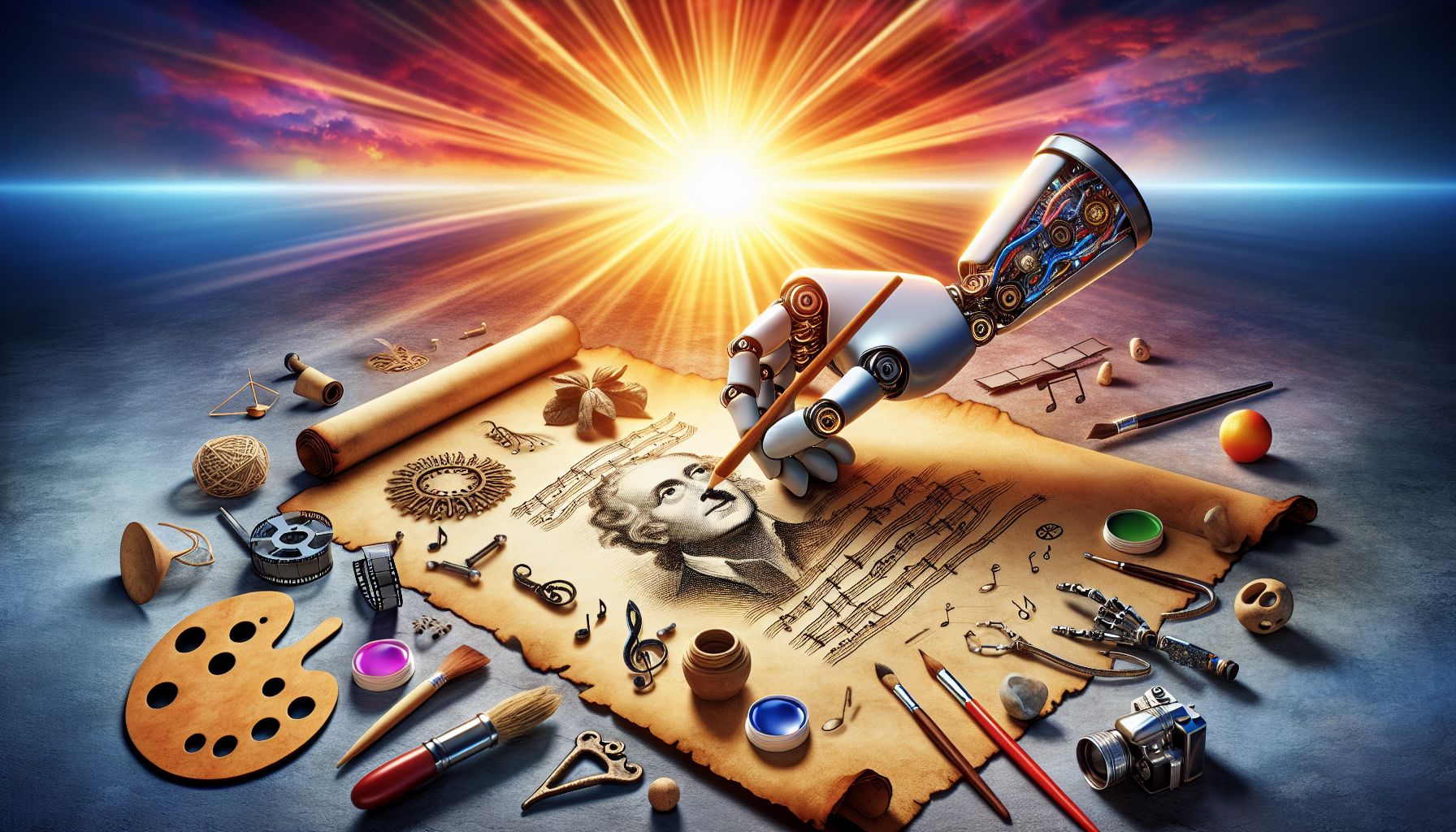
Hey fellow tech nerds! Today, we’re diving into a super exciting topic that’s been buzzing around like a hyperactive bee at a tech garden party: Artificial Intelligence in Creative Arts. If you’re anything like me, you’re excited and maybe a tad nervous about letting computers unleash their creative genius. But trust me, there’s so much cool stuff happening here that it’ll make your circuits tingle, and you don’t even need to be a robot to feel it!
The Creative Spark of Machines
Let’s face it—AI getting into the art world is kind of like your introverted coder friend suddenly joining a theater troupe. It’s unexpected, slightly surreal, but weirdly fascinating. Traditionally, art was one of those realms supposedly immune to the cold logic of machines. But with AI making its grand entrance, those lines are becoming delightfully blurred.
From Random Notes to Symphonies
Take AI-generated music, for instance. Remember when you’d compose an epic symphony using pots, pans, and maybe your sibling’s suffering violin skills? No? Just me? Anyway, AI composers like OpenAI’s MuseNet or AIVA are now creating music that doesn’t just echo human compositions but actively pushes the boundaries of what music can be.
These neural networks are like overzealous kids in a candy store, gobbling up everything from classical Beethoven to pop-punk Avril Lavigne (admit it, “Complicated” was your jam). With this database of musical knowledge, AI composes new melodies that sound fresh but familiar, the aural equivalent of meeting an old friend who’s got a fabulous new haircut.
Painting with Pixels
Then there’s AI-powered visual art. Who thought algorithms could wield the digital brush with such flair? Artists using tools like DeepArt or the infamous DALL-E are getting a digital hand to explore styles from van Gogh to email spam. And while we can debate whether pixels splashed by an algorithm have the same soul as a human’s brush strokes, you can’t argue that AI art isn’t provoking thought and stirring emotions.
Implications and Creative Collaboration
Alright, so we’ve established that machines can art just as well as they can math. But what does this mean for us humans in the art sector? Will AI steal all the paintbrushes, canvases, and mics, leaving us jobless and pitifully un-artistic?
Artists Are Not Going Extinct
Fear not, dear art lovers. The real beauty of AI in the creative arts lies not just in what the machines can do on their own. Instead, it’s about the possibilities that emerge when human creativity and machine logic meld their unique superpowers. We’re talking about collaborations between artists and AI that produce works neither could achieve solo.
Think of the AI as a digital paintbrush rather than the artist. It’s up to skilled humans to decide how, when, and where to use it to create the next masterpiece, or a meme. Honestly, I’m not judging, memes are modern art too, right?
New Avenues and Audiences
AI also opens new doors for inclusivity in the arts. Remember the times when only those with the right resources, or geographical luck, could attend the best art schools or have their works exhibited in renowned galleries? AI has the potential to democratize that process by offering tools that can be accessed by anyone with a computer and curiosity. And trust me, folks more curious than you looking at other people’s Spotify playlists are out there creating incredible art, thanks to AI.
Challenges and Skepticism
Of course, it’s not all rainbows and unicorn artists. With any tech development that shakes things up, there’s usually a side dish of skepticism and challenges to face.
The Authenticity Dilemma
One of the big debates is the age-old question of authenticity, the metaphysical stuff we art tech geeks meditate on when we’re not hunched over keyboards. If an AI creates a piece of art with minimal human intervention, is it really “art” in the traditional sense? While digital philosophers are still arguing over this at tech conferences, it’s a question worth pondering.
The Ethics of AI Art
Then there’s the ethical side. Releasing AI into the creative wild involves navigating intellectual property laws, copyright issues, and societal impacts. Do artists have ownership of works generated by AI they programmed? How do we ensure these tools aren’t being used to perpetuate harmful stereotypes or malicious misinformation?
A Wild Ride Ahead
In the end, we’re just in the first act of this wildly exciting play. AI in creative arts is kinda like a freshly opened box labeled “Schrodinger’s Art”, a thrilling paradox of potential and unpredictability. Let’s keep our minds open and maybe upgrade our ethical frameworks (and firewalls) as we sail this techno-artistic sea.
Let’s stay curious, question everything, and keep creating, whether you’re using pixels or paintbrushes. And if you happen to create the next Mona Lisa using an algorithm, do send a postcard!
Until next time, stay awesome, stay arty, and keep that innovation engine purring. Time for me to get back to my jazz AI project because, why not? It’s bound to be a hit…or at least an interesting AI disaster.
Have any wild AI art tales of your own? Drop them in the comments!