When Everyone Knew Who Had the Good Ladder
Mrs. Chen had the twenty-four-foot extension ladder that could reach any second-story gutter in the neighborhood. Everyone knew this. More importantly, everyone knew she’d lend it out, no questions asked, as long as you brought it back clean and helped her drag it back to the garage. This wasn’t charity or some feel-good community program. It was pure practicality dressed up as neighborliness.
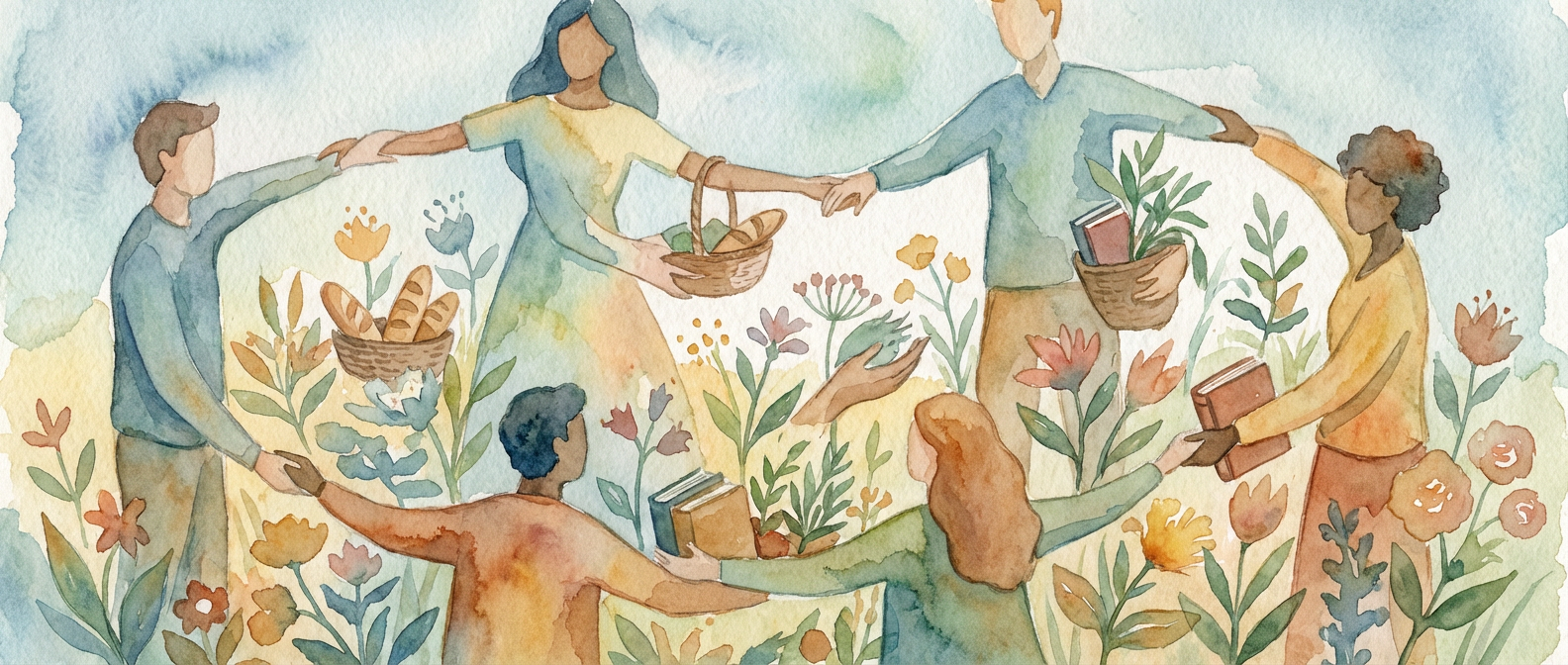
That ladder got more use than most rental equipment. It cleaned gutters, hung Christmas lights, rescued cats, painted trim, and installed storm windows across a six-block radius. The system worked because it had to. Hardware stores were further away, rental places closed early, and nobody wanted to spend sixty dollars on something they’d use twice a year.
When Mrs. Chen moved to assisted living, we lost more than access to good equipment. We lost the knowledge that such systems could exist at all. The ladder disappeared, sure, but worse was watching our collective memory fade about how sharing actually worked when it was part of daily life, not something managed through apps or committees.
The Real Infrastructure Was Always Social
Before we started calling it “mutual aid,” people were running resource-sharing networks that would make modern platform developers weep with envy. Sarah Martinez kept the neighborhood’s spare house keys and knew which teenagers could be trusted to feed pets during vacations. The Kowalskis had the pickup truck and were willing to help people move furniture. They’d accept help with their elderly parents in return, but never kept strict score.
These networks operated on what economists call “generalized reciprocity” but what everyone else just called “being decent neighbors.” You helped when you could, you asked for help when you needed it, and the books never quite balanced but somehow everything worked out. The whole thing was remarkably efficient because it was built on actual relationships and real knowledge of who had what skills and resources.
The infrastructure wasn’t visible until it broke down. When the Martinezes moved away, nobody else stepped into the key-keeping role. When the Kowalskis got too old to drive the pickup, half the block lost their connection to affordable hauling. These weren’t just inconveniences. People’s household costs went up and the whole community became less resilient.
What Algorithms Can’t Calculate
Modern mutual aid apps promise to recreate these networks through technology, but they’re solving for efficiency while missing the social capital that made the original systems work. The apps can match someone who needs a drill with someone who has one, but they can’t replicate the knowledge that Bob’s drill bits are always sharp because he maintains his tools religiously, or that Maria will show you how to use the circular saw safely instead of just handing it over.
The old networks worked because they were part of ongoing relationships. When you borrowed Mrs. Chen’s ladder, you also got her honest assessment of whether your project was realistic, her recommendation for the best hardware store, and sometimes her grandson’s help carrying the thing. The transaction was never just about the object. You got knowledge transfer, skill sharing, and social connection bundled together.
Digital platforms excel at connecting strangers but struggle with building the trust and reciprocal obligations that made neighborhood sharing sustainable. You can rate someone five stars for lending you their pressure washer, but that doesn’t create the same social fabric as knowing their kids, sharing vegetables from your garden, and having their phone number for emergencies.
Building Networks That Last Beyond Good Intentions
The most successful contemporary mutual aid networks understand that the goal isn’t just moving resources around. It’s creating ongoing relationships that can handle multiple types of exchange over time. The neighborhood tool library that actually works isn’t just a place to check out equipment. It’s where people learn from each other, where the guy who knows engines offers informal repair clinics, and where the woman who’s great at organizing ends up coordinating disaster response.
These networks succeed when they solve immediate, practical problems while building social infrastructure for bigger challenges. The community garden that shares tools and knowledge also becomes the group that coordinates neighborhood cleanups and advocates for better street lighting. The informal childcare swaps turn into networks that can handle eldercare, job searches, and emergency support.
The key is starting with concrete needs and letting relationships develop naturally around shared work. People bond over fixing broken lawnmowers or planning block parties. They stick around because they’ve built something together and learned they can count on each other for more than just borrowing sugar.
Making the Invisible Visible Again
Rebuilding these networks starts with recognizing the ones that already exist and figuring out how to strengthen them. Every neighborhood has informal resource sharing happening. Someone always knows who has the best recommendations for contractors, who’s willing to accept package deliveries, or who has the skills to help with tax preparation. The trick is making these connections more visible and accessible without killing their organic nature.
The most effective approach is usually starting small and specific. Organize around a single shared need like tool sharing, child care, or garden space. Focus on solving real problems for people who already live near each other. Let relationships build around concrete collaboration rather than abstract community-building goals.
Success looks different from what we might expect. It’s not necessarily growth or formal organization. It’s sustainability, resilience, and the kind of deep social infrastructure that can handle both everyday needs and genuine emergencies. It’s neighbors who know each other’s skills and resources, who can coordinate responses to problems without waiting for official help, and who understand that sharing work makes everyone’s life easier.
The networks we need already exist in fragments throughout our neighborhoods. The question isn’t whether we can create mutual aid systems from scratch. It’s whether we can recognize, connect, and strengthen the resource-sharing relationships that are already keeping our communities functional. That work starts with paying attention to who has what skills, who needs what help, and how we might better coordinate the knowledge and resources we already have.