The Pattern Behind the Headlines
Last month’s heated exchange at the Riverside Community Center wasn’t really about noise ordinances, despite what made it into the local news. Mrs. Chen’s complaint about late-night music from the Martinez family’s quinceañera celebration became a flashpoint that drew forty-seven residents to what’s usually a sparsely attended monthly meeting. But if you look through the city council minutes from the past eighteen months, you’ll see this same underlying tension popping up again and again: at zoning hearings about backyard gardens, in debates over street food vendors, and in discussions about holiday decorations in the town square.
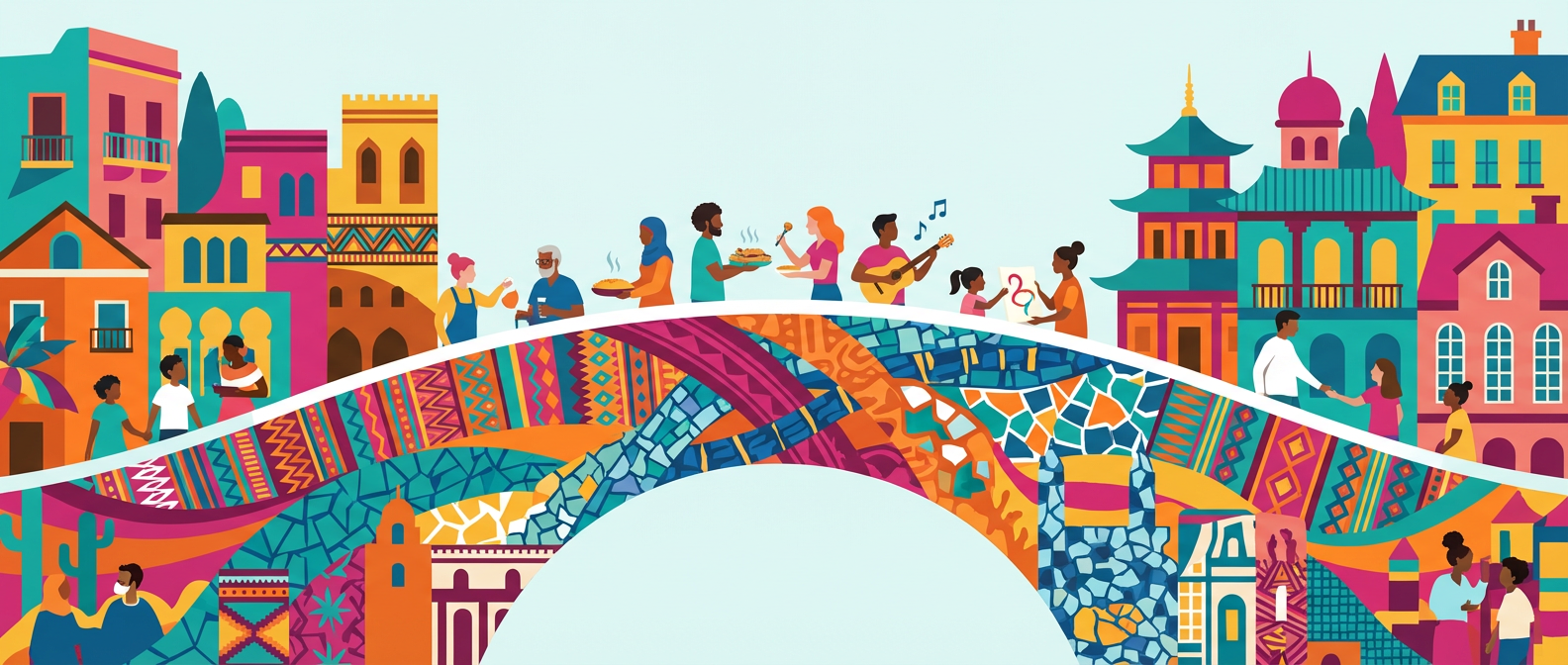
The real story isn’t about individuals being inconsiderate or intolerant. It’s about how our community infrastructure and policies haven’t kept up with demographic changes that completely transformed our neighborhood over the past decade. When the 2020 census showed that Riverside had shifted from 78% white to a true plurality community, with no single ethnic group making up more than 35% of residents, our city systems were still running on assumptions built for a much more homogeneous population.
This disconnect creates predictable friction points that have little to do with personal animosity and everything to do with different cultural practices running headfirst into regulations designed for completely different community norms. Understanding this pattern helps us tackle the root causes rather than just putting band-aids on the symptoms.

Where Systems and Traditions Collide
The noise ordinance that sparked last month’s controversy was written in 1987, when most community celebrations in Riverside happened in rented halls or churches with built-in sound management. The ordinance sets a 10 PM cutoff for amplified music, which works fine for backyard barbecues but creates impossible choices for families whose traditional celebrations naturally run into the evening hours. Quinceañeras, Vietnamese wedding receptions, and Ethiopian coffee ceremonies all follow cultural rhythms that clash completely with regulations designed around different assumptions about how people celebrate.
Our zoning codes around front-yard use reflect a particular vision of residential aesthetics that doesn’t account for cultures where food production and outdoor cooking are central to family life. The Hernandez family’s front-yard vegetable garden triggered three code enforcement visits before they learned they needed to apply for a variance. The Okonkwo family’s outdoor bread oven required a months-long permitting process that nearly led them to abandon the project entirely.
These aren’t rare cases or exceptional situations. They’re what happens when rapid demographic change meets stubborn institutional frameworks. When city planners designed our current systems, they weren’t thinking about having Somali grocers, Korean churches, and Mexican bakeries all operating within a six-block radius. Honestly, I think the complexity is beautiful, but our policies haven’t caught up.
The Economics of Cultural Friction
Behind many of these conflicts are economic pressures that make cultural accommodation feel like zero-sum competition. The debate over street food vendors that took over three city council meetings this spring wasn’t really about food safety standards, despite the official framing. It was about established restaurant owners watching their customer base shift toward more affordable, culturally specific options that operate under different business models.
When the Gutierrez family started selling tamales from their front porch on weekends, they weren’t trying to undercut local businesses. They were following an economic strategy that’s worked for their family for generations while meeting the needs of neighbors who’d been driving forty minutes to find authentic food. But from the perspective of Main Street restaurant owners already struggling with post-pandemic recovery, any new food competition feels threatening, especially when it operates under different regulatory frameworks.
The city’s business licensing structure, designed around brick-and-mortar establishments, doesn’t have clear pathways for home-based food sales or rotating market vendors. This regulatory gap pushes immigrant entrepreneurs into informal economies that then become targets for complaints about unfair competition. The economic anxieties are real on both sides, but the current system pits community members against each other instead of creating frameworks that could benefit everyone.
Property values add another layer of complexity. Long-time residents who’ve built wealth through homeownership worry that visible cultural differences might affect their biggest financial asset. These concerns aren’t necessarily rooted in prejudice. They reflect real anxiety about economic security in a housing market that often punishes neighborhoods seen as “too ethnic” or “too different.”
Communication Gaps That Make Everything Worse
The most frustrating aspect of these disputes is how often they come from simple miscommunication rather than genuine cultural incompatibility. The conflict between the Johnson family and their Sudanese neighbors over lawn maintenance went on for six months before anyone discovered that the Abdalla family thought they were being respectful by not using power tools on Sundays, while the Johnsons saw the resulting Monday morning lawn care as deliberately disruptive.
Language barriers obviously play a role, but the deeper issue is that we don’t have informal social networks that help neighbors understand each other’s daily rhythms and cultural practices. In more established communities, these understandings develop naturally over time through casual interactions. But in rapidly changing neighborhoods, people often lack the social infrastructure to build these relationships.
Our city’s official communication systems aren’t designed to bridge these gaps. Meeting notices go out in English only, despite having residents who primarily speak Spanish, Arabic, Somali, and Vietnamese. Public comment periods assume familiarity with Robert’s Rules of Order and middle-class professional communication styles. Community surveys get distributed through channels that miss entire demographic segments.
This means that policy decisions affecting everyone get made with input from only the most civically engaged English speakers, creating a feedback loop where regulations continue to reflect the needs and assumptions of a shrinking portion of the community.
Building Bridges That Actually Hold
The good news is that other communities have figured out practical solutions to these challenges, and we don’t need to reinvent the wheel. Minneapolis’s “Cultural Navigator” program pairs new immigrant families with established residents for six-month mentorships that cover everything from snow removal expectations to school enrollment procedures. It’s prevented dozens of conflicts before they started, while building genuine cross-cultural friendships.
Revising our noise ordinance to include cultural accommodation provisions would address the immediate trigger for last month’s controversy while setting a precedent for more inclusive policy-making. Several cities have successfully implemented tiered noise allowances that permit traditional celebrations with advance community notification, balancing cultural needs with neighbor consideration.
The street food vendor issue could become a model for economic inclusion if we created a pilot program allowing home-based food sales with simplified permitting and safety training. This would bring the informal food economy into the formal regulatory framework while creating new revenue streams for both vendors and the city.
These solutions require more upfront investment in community engagement and policy flexibility, but they’re far less expensive than managing ongoing conflicts through code enforcement and mediation. More importantly, they build community wealth and social capital instead of draining both through constant friction.
Next month’s city council meeting will include public input on proposed updates to our community engagement policies. If you’ve been thinking about ways to make our neighborhood work better for everyone, this is a concrete opportunity to influence systems that affect all of us. I’ll be there with coffee and a sign-up sheet for anyone interested in helping draft specific policy recommendations that reflect our community’s actual diversity rather than bureaucratic assumptions about who we used to be.