The Tuesday Night Text Chain That Changed Everything
It started with Maria sending a photo of the empty lot behind the library at 9:47 PM on a Tuesday. “This could be something,” she typed, followed by three tree emojis. By Thursday morning, seventeen neighbors had chimed in with everything from soil pH concerns to offers of shovels. By Saturday, we had forty-three people, six wheelbarrows, and the beginnings of what would become Riverside’s first community food forest.
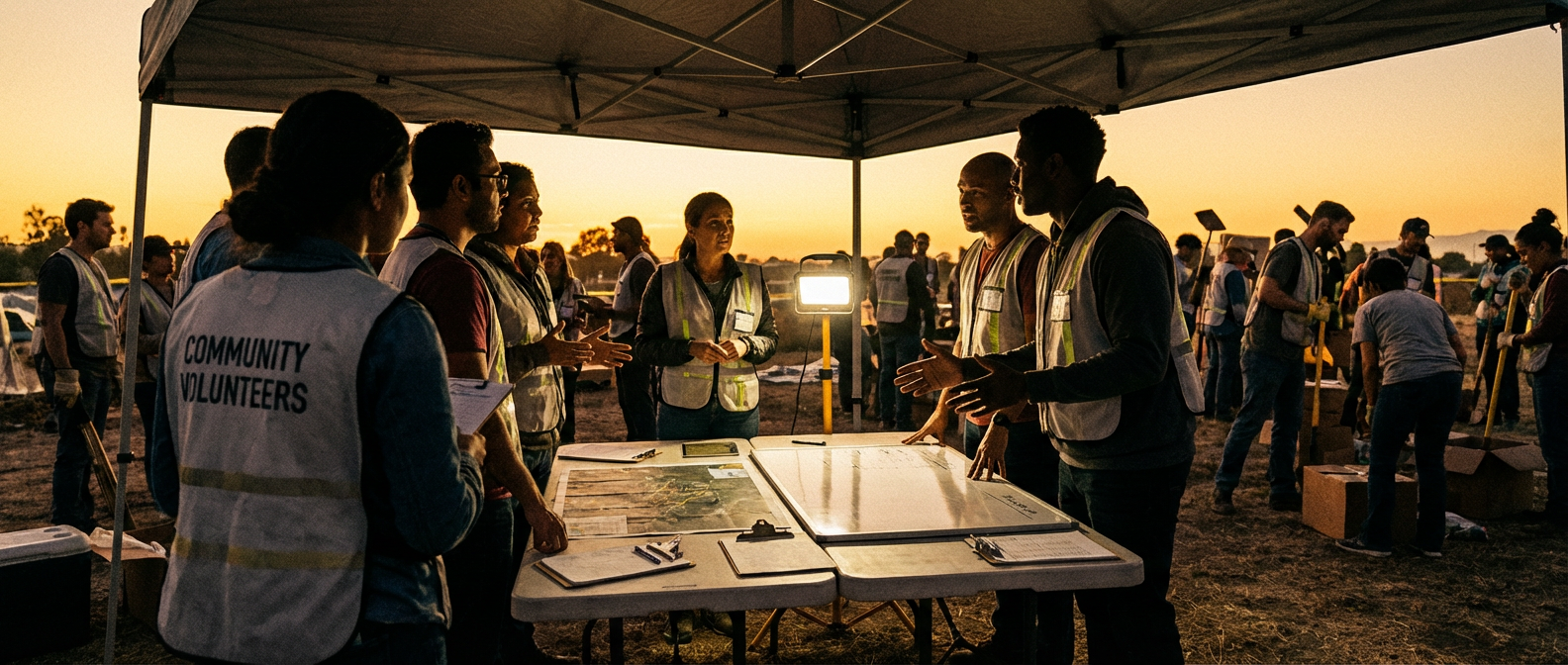
That text chain taught me something I wish I’d known five years ago when I first started trying to organize neighborhood cleanups that attracted exactly three people and a very confused dog walker. The magic of community events doesn’t happen on event day. It happens in between the initial idea and when people actually show up, in building connections and trust that makes strangers willing to spend their Saturday morning getting dirt under their fingernails together.
After watching dozens of community projects bloom or die, I’ve learned that getting volunteers to show up has less to do with perfect organizational charts and more to do with understanding the weird mix of motivation, timing, and human psychology that determines whether people actually follow through on their good intentions.

Reading the Room Before There Is a Room
My biggest early mistake was falling in love with my own ideas before checking if anyone else actually cared. I spent weeks planning an elaborate neighborhood history walk, complete with laminated fact sheets and carefully mapped stops, only to discover on the morning of the event that most people were way more interested in the ongoing drama of the broken streetlight on Maple Avenue than they were in learning about the 1890s trolley system.
Now I start every project by doing what I call “porch research.” I walk through the neighborhood, stop to chat with whoever happens to be outside, and ask open-ended questions about what people notice, what bothers them, what they wish was different. Mrs. Chen mentioned wanting a place for her grandson to safely ride his bike. The college students renting the blue house complained about having nowhere to compost. The retired teacher watering her front garden wondered aloud why the community center stopped offering evening programs.
These conversations reveal what people actually worry about, the stuff they think about but don’t always speak up about in official channels. They also help you spot the natural connectors, the people who somehow know everyone and whom everyone trusts. These folks are your secret weapons. They can legitimize a project simply by mentioning it to their neighbors.
The key is listening for what people already care about rather than trying to convince them to care about what you’ve already decided matters. Sometimes the most successful events come from problems you never would have thought to solve, like the potluck that started because three different people mentioned missing having a place to practice their English conversation skills.
The Art of Asking (And Making It Easy to Say Yes)
Volunteer coordination basically comes down to reducing friction between good intentions and actual participation. People want to help, but they also have jobs and kids and elderly parents and a dozen other legitimate demands on their time and energy. Your job is making helping as straightforward as possible while being crystal clear about what you’re asking for.
This means getting specific about time commitments, skill requirements, and what people should expect. Instead of asking for “volunteers to help with the block party,” try “someone who can spend two hours on Saturday morning helping set up tables and directing people to parking.” Instead of seeking “anyone who knows about gardening,” look for “someone willing to spend thirty minutes explaining composting basics to a group of curious neighbors.”
The most reliable volunteers, I’ve discovered, are often the people who initially claim they’re “not really organizer types” but who show up consistently because you’ve made their role clear and manageable. Tom insisted he was terrible with people but became our most effective volunteer coordinator because I asked him specifically to handle tool inventory and distribution. This played to his methodical nature and kept him busy enough that he forgot to be nervous about the social aspects.
Smart volunteer coordination also means building in multiple ways for people to contribute based on their availability, skills, and comfort level. Some people love being in charge of logistics. Others prefer working quietly in the background. Some can only help on weekends, others have random Tuesday afternoons free. The goal is creating enough different entry points that most people can find a way to participate that feels genuine rather than forced.
When Things Go Sideways (And They Always Do)
The weather app promised clear skies for our first community bike repair workshop. Instead, we got the kind of steady drizzle that makes everyone question their life choices while standing in a parking lot holding rusty chain tools. Half our volunteers texted last-minute cancellations, our borrowed canopy developed a leak directly over the work table, and someone had forgotten to bring paper towels. Turns out paper towels are pretty crucial when you’re dealing with bike grease and wet hands.
But here’s what I learned from that soggy Saturday: the people who showed up anyway, who helped move everything under the library’s covered entrance, who laughed about getting muddy while adjusting brake cables for neighbors they’d just met, those people became the core team for every event after. Shared problem-solving creates bonds that perfect conditions never could.
The best community events happen not because everything goes according to plan, but because you’ve built enough trust and flexibility into the process that people are willing to adapt when circumstances change. This means having backup plans, but more importantly, it means creating a culture where improvisation feels collaborative rather than chaotic.
It also means accepting that some events will simply fail, and that’s useful information rather than personal defeat. The community garden planning meeting that nobody attended taught us that people needed childcare options before they could commit to evening meetings. The art fair that got rained out showed us how much people had been looking forward to it, which generated enough enthusiasm to make the rescheduled version twice as large.
Building Something That Lasts Beyond Saturday
The real test of successful community event planning isn’t how smoothly the day itself goes, but whether it creates connections that stick around after the cleanup crew goes home. The best events work like community infrastructure, creating relationships and shared experiences that make the next collaboration easier and more natural.
This means paying attention to the social dynamics during events, introducing people who share similar interests, and creating opportunities for informal conversation alongside the official activities. It means following up afterward, sharing photos and stories that help people remember why they enjoyed participating. It means being patient with the slow work of trust-building that makes ambitious projects possible.
Most importantly, it means recognizing that your role as an organizer should be temporary. The goal is always creating systems and relationships that can work without you, planting seeds for projects you might never even hear about. Maria still sends photos to that original text chain, but now they’re usually updates about fruit trees planted by neighbors who have started organizing their own weekend work parties.
If you’ve been thinking about organizing something in your own community, start small and start by listening. Walk around your neighborhood with genuine curiosity about what people care about. Ask questions. Notice who lights up when talking about specific problems or possibilities. The perfect event is probably much simpler and much closer to home than you think, and the people who will make it happen are likely already wondering if anyone else has noticed the same things they have.