When the Grocery Store Closed, Neighbors Got Creative
Last March, the only full-service grocery store in Riverside closed with two weeks’ notice. For a neighborhood where nearly 40 percent of households don’t have reliable transportation, this wasn’t just an inconvenience. It was a crisis that could have left families choosing between expensive corner store prices and hour-long bus rides to reach fresh food.
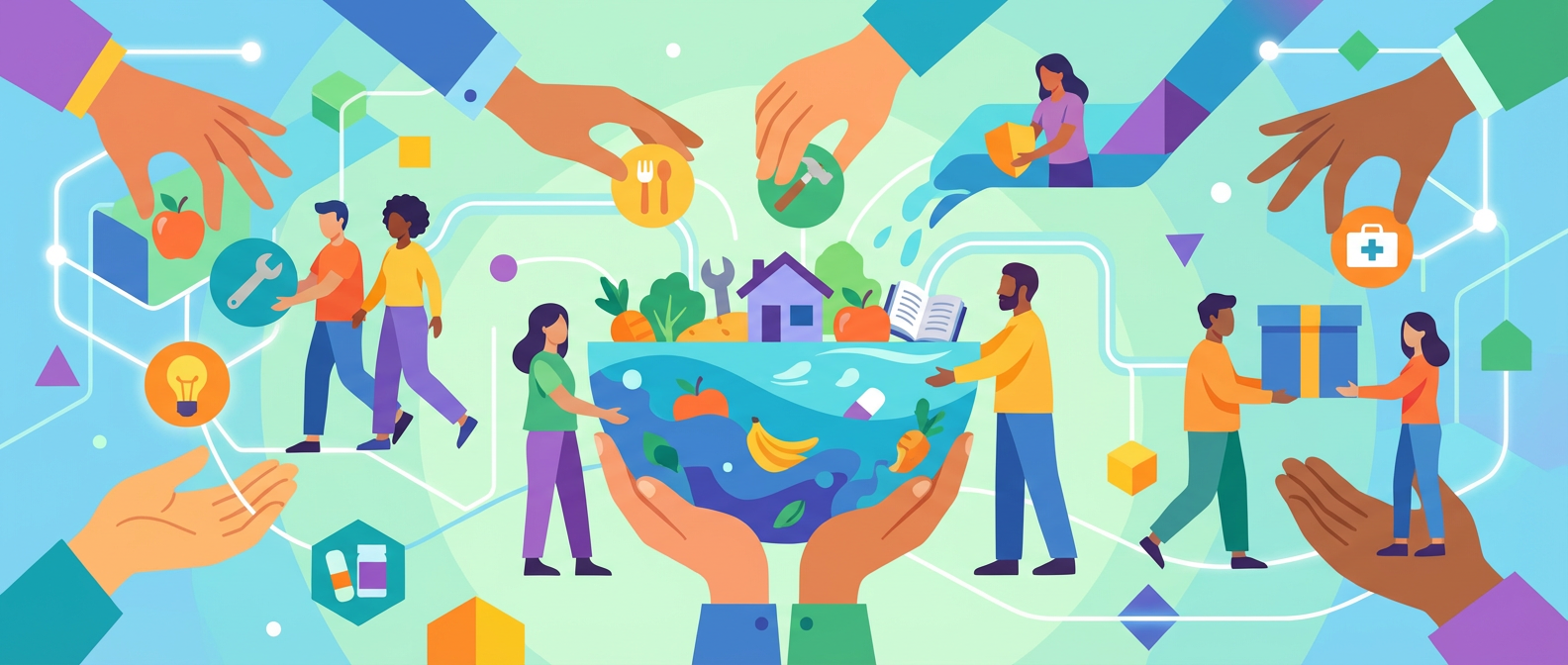
Instead of waiting for a new store that might never come, residents did something different. They built their own food network from scratch. What started as emergency pantry boxes distributed from Maria Santos’s front porch has grown into something the city’s food security task force now studies as a model. The Riverside Food Collective feeds 180 households weekly, runs a tool library, and somehow makes it all feel less like charity and more like community.
I’ve been following their story for eight months now, attending meetings and helping with deliveries when my schedule allows. What strikes me isn’t just that they solved their immediate problem, but how they did it in a way that actually strengthened relationships between neighbors who barely knew each other before.

Starting Small With What They Had
The first planning meeting happened in Santos’s living room with seven people and a shared Google Doc. They mapped every resource they could think of: who had pickup trucks, who knew about food safety regulations, who had connections with local farms. James Chen, a retired teacher, offered his garage for storage. Linda Washington, who runs a small catering business, knew suppliers willing to sell at cost.
Rather than trying to copy a traditional food bank model, they designed around their neighborhood’s specific needs and assets. Many residents work shifts and can’t make typical pantry hours, so they created pickup points that stay stocked throughout the week. Families with extra garden produce drop it off at the same locations where others pick up staples.
The smartest move came from community organizer David Kim, who suggested they think of it as a network rather than a service. Instead of having recipients and providers, everyone contributes something. People who can’t afford to buy food might offer childcare during sorting days, or use their language skills to help with outreach. This approach meant that when the initial emergency funding ran out after three months, the network had already built the relationships and systems needed to sustain itself.
The Mechanics That Make It Work
Every Tuesday morning, volunteers meet at Chen’s garage to sort bulk purchases and donated food into family-sized portions. The process is remarkably organized. They use a simple app to track what each household needs, accounting for dietary restrictions, family size, and cultural food preferences. This isn’t just about calories. It’s about making sure the Ethiopian families get berbere spice for their cooking and the Mexican families have access to good tortillas.
The collective pools purchasing power to buy directly from regional distributors and local farms. Twenty families ordering together can get organic produce at prices that beat the chain stores. They’ve worked out deals with three urban farms to take their “seconds” – slightly imperfect vegetables that don’t make it to farmers markets but taste just fine.
The distribution network relies on eight pickup points throughout the neighborhood, each managed by a different volunteer. Santos’s porch is still one of them, but now there’s also a spot at the community center, another at the bus stop near the elementary school, and one inside the laundromat. Each location has a weatherproof bin with a simple combination lock, restocked twice weekly.
What impressed me most is their approach to food safety and quality. Washington led training sessions on proper storage and handling. They invested in good coolers and digital thermometers. The produce that goes out is often fresher than what you’ll find at many stores because it moves so quickly through their system.
Beyond Food: Building Connected Community
The food network became a foundation for other forms of mutual aid. When families started asking for help with school supplies, the group added an educational resource share. Parents contribute books, art supplies, and gently used clothes their children have outgrown. The same pickup points now handle multiple needs.
The tool library grew naturally when Chen mentioned he had extra gardening tools sitting unused in his garage. Now residents can borrow everything from power drills to canning supplies. The shared lawn mower has probably saved the neighborhood hundreds of dollars in lawn care costs. More importantly, people started talking to neighbors they’d never met before when they came to pick up tools.
Last month, they launched a skill-sharing program. Rosa Martinez teaches basic auto maintenance in the community center parking lot every other Saturday. Kim runs financial literacy workshops. Dr. Sarah Johnson, recently retired, offers free health screenings and connects people with appropriate care. These sessions consistently draw 15 to 20 participants, and the conversations often continue long after the formal programming ends.
The network has also become a source of local economic development. When members needed services, they started hiring each other first. Martinez’s teenage son now has a steady income helping elderly residents with technology issues. Two families have started small businesses selling prepared foods and handmade items to their neighbors.
Lessons That Travel
Other neighborhoods have started asking how to copy what Riverside built. The answer isn’t a simple blueprint because each community has different resources and needs. But there are principles that seem to work.
Start with relationship building, not service delivery. The most successful networks spend their first months just getting people talking to each other. Host regular social gatherings. Create opportunities for neighbors to work together on small projects before tackling bigger challenges. Santos always emphasizes that they’re not running a charity, they’re building community wealth that happens to include food security.
Design for dignity from the beginning. The most clever aspect of Riverside’s model might be how it avoids the typical power dynamics of traditional aid. Everyone contributes according to their abilities. No one has to prove their need or justify their choices. The system works because it treats participants as whole people with skills and knowledge, not just problems to be solved.
Plan for sustainability, not just launches. Many mutual aid efforts burn out because they rely too heavily on the initial enthusiasm of a few dedicated organizers. Riverside built systems that can function even when key people are unavailable. They cross-trained multiple people for each essential role and created simple documentation so new volunteers can get up to speed quickly.
If you’re thinking about food security in your own neighborhood, start by mapping what already exists. You might be surprised by how many resources are already there, waiting to be connected. The hardest part isn’t finding solutions, it’s creating the spaces where neighbors can find each other.