The Money Is Actually There (And It’s Waiting)
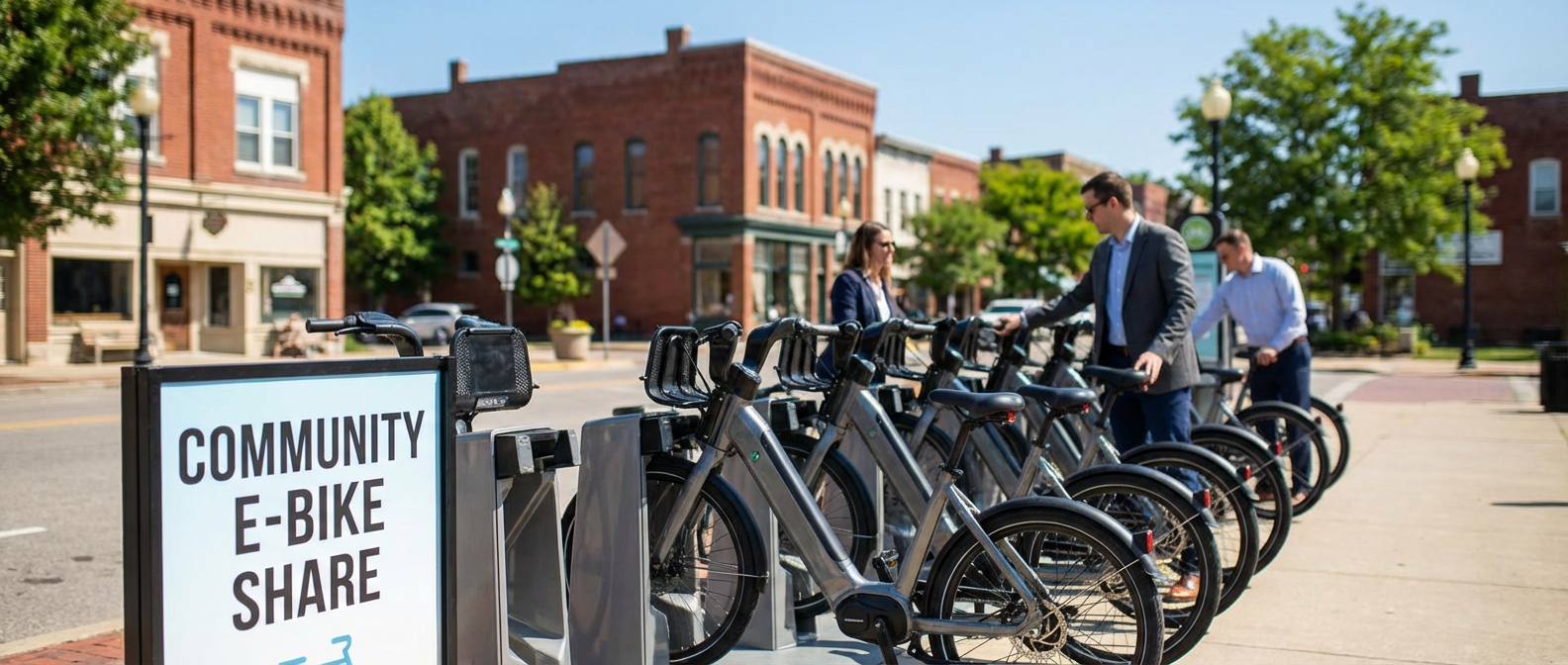
Here is something that happened while you were probably not reading city council agendas: the federal government decided to spend 450 million dollars on getting people onto electric bikes. Not as part of some flashy national campaign. Not with press conferences or celebrity endorsements. Just quietly, systematically, through the U.S. Department of Transportation’s Active Transportation Infrastructure Investment Program, which funded over 60 municipal e-bike lending and subsidy programs in communities with fewer than 100,000 residents. This is the kind of funding that transforms how a town moves, if someone actually pays attention and puts in the work to apply.
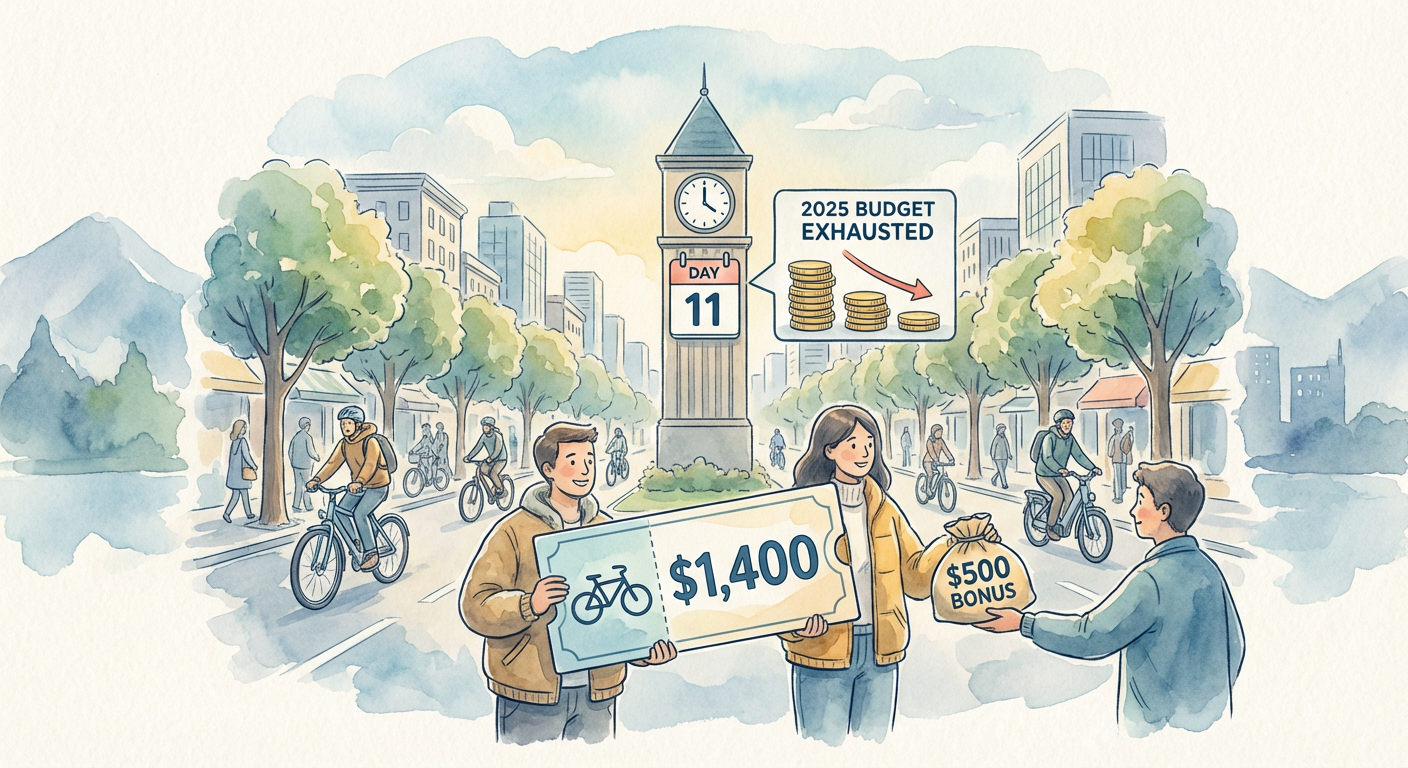
The speed at which this money disappears tells you something important about demand. Denver’s e-bike rebate program, which offered up to 1,400 dollars per bike with an additional 500 dollar bonus for lower-income applicants, exhausted its entire 4 million dollar 2025 budget allocation in eleven days. Eleven days. Not because Denver is some bicycle utopia. Because people wanted to ride bikes. They just needed help affording them. The program didn’t run out because the city was throwing money at a problem nobody cared about. It ran out because the problem was real and the solution actually worked.
What Happens When Your Neighbor Gets an E-Bike
This is the part that matters most, and it is measurable. A 2025 study from the University of Colorado Denver tracked what actually happened to people who participated in e-bike programs. Thirty-eight percent of participants reduced their car trips by more than four trips per week. That is not a rounding error. That is someone who used to drive to the grocery store, the gym, the coffee shop, their friend’s house. Now they ride. The infrastructure did not change. The roads are the same. What changed is that the barrier to entry fell away.
The data gets more specific when you look at who benefited most. Lower-income participants showed the highest rates of modal shift, meaning the people who got the most out of the program were people for whom a 1,400 dollar bike represented an actual barrier to getting around. This matters because it means e-bike programs are not solving a problem for the wealthy who could have bought a bike anyway. They are solving it for people whose transportation options were genuinely limited before. That is the definition of infrastructure that works.
How a Library System Became a Bike System
Chattanooga, Tennessee took a different approach entirely. Instead of rebates, the city launched a free municipal e-bike library in March 2025. You check out an e-bike like you check out a book. You need a library card. You reserve online or in person. You ride for a few hours or a few days. You return it. Fourteen neighborhood hubs across the city mean that no matter where you live, there is a place to access a bike. In the first six months, the program recorded 12,000 individual checkouts. That is not 12,000 bikes. That is 12,000 separate trips, which means people figured out that this was worth their time to do again.
The genius of the library model is that it removes multiple barriers at once. You do not have to own a bike. You do not have to maintain it. You do not have to figure out where to store it. You do not have to come up with 1,400 dollars. You just need to know where your nearest hub is, which most people in Chattanooga apparently do. The program works because it meets people where they are instead of asking people to upend their entire life to ride a bike.
The Safety Effect Nobody Expected
Here is something else that happened as municipal e-bike programs expanded: cycling got safer. The League of American Bicyclists State Report Cards tracked cycling-related injury rates in states with active municipal e-bike incentive programs and found an average eleven percent year-over-year decline. This might seem counterintuitive. More bikes on the road. More accidents, right? But that is not what happened. What happened is that e-bikes brought a different kind of rider into the bike lane. People who would never have cycled before now had a tool that made it possible. These riders tend to be slower, more cautious, older, and more visible. They changed the composition of who rides. And somehow, everyone got safer.
The stability of e-bikes matters too. A heavier bike with better weight distribution and lower center of gravity handles differently than a lightweight road bike. Someone riding an e-bike is less likely to wobble into traffic. Less likely to lose control on hills. Less likely to run a stop sign because they need momentum to make it. The infrastructure did not change. The riders did. The streets became safer because the people on them were riding differently.
What This Means for Your Town
So where does this leave you, sitting in your actual town with your actual commute and your actual questions about whether any of this matters. It means that the U.S. DOT Active Transportation Infrastructure Investment Program is still actively accepting applications. It means someone on your city council, or someone who could talk to your city council, could move forward with a rebate program or a lending library or some hybrid nobody has thought of yet. It means there is federal money waiting for municipalities that are willing to do the work of applying.
It also means this is not about whether you are a bicycle person. This is about whether you want to live in a place where transportation options exist. Where a single parent can get to work without sitting in traffic. Where a teenager can get to school without depending on someone else’s schedule. Where an older person can get to the doctor without driving. These are not bicycle problems. These are human problems. The e-bike happens to be the tool that solves them.
The next city council meeting is probably this month. The agenda is probably online. Someone probably needs to raise their hand and ask whether your town has applied for this funding. If you know anything about how your town moves, or how it fails to move, or who gets left behind because movement is too expensive or too difficult, then this conversation matters. The money is real. The results are documented. The question is just whether anyone is paying attention enough to say yes.